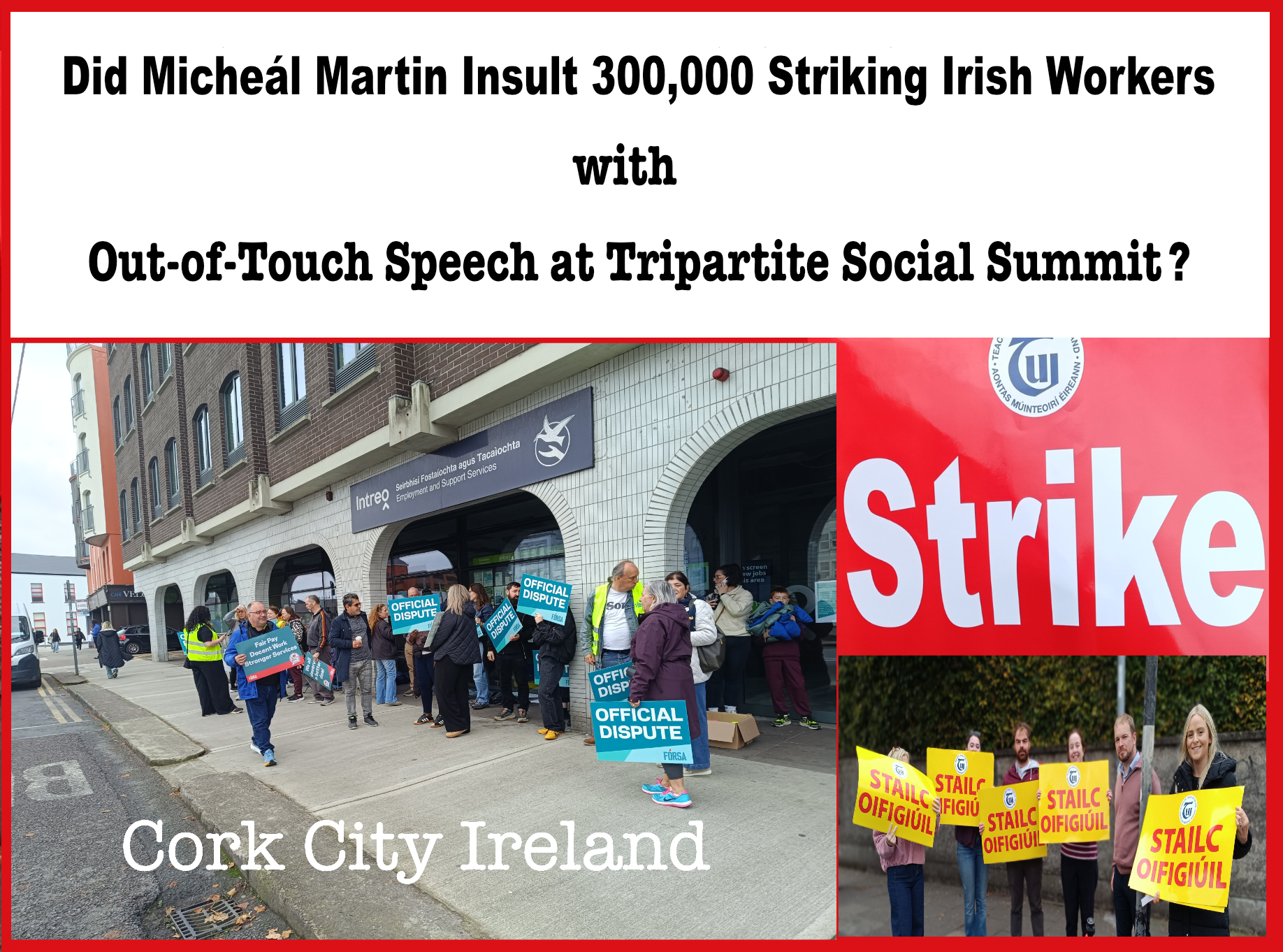
14 October 2026, while Micheál Martin attended the Tripartite Social Summit in Brussels, more than 300,000 public-sector workers were taking part in a nationwide strike over pay in his own country.
As 300,000 Irish workers stood on picket lines across Ireland, on 14th October 2026, Micheál Martin chose that very day to stand in Brussels pontificating about quality jobs, competitiveness and social dialogue, as though the struggle of hundreds of thousands of workers, on strike nationwide, in his own country for fair treatment and justice were of no consequence whatsoever.
For the summit itself, a published statement attributed to Micheál Martin. The statement reads
INSIGHT EU MONITORING
The sheer contempt conveyed by that disconnect is staggering
“Europe is at its strongest when it is united and pulling in the same direction on the important issues. At today’s meeting we discussed how we can work together to build a more competitive Europe, with quality jobs and high skills, underpinned by a budget that can support our ambition for what we want to achieve together”.
While hundreds of thousands of workers were forced onto picket lines to make their voices heard, their Taoiseach was busy preaching the virtues of social dialogue on the European stage, behaving as though the mass withdrawal of labour across his own country were little more than background noise.
The timing was extraordinary.
This crisis did not emerge in a vacuum.
It has happened under his leadership, on his watch, and under ministers of his own choosing a government that has presided over the deterioration of industrial relations to the point where hundreds of thousands of workers felt they had no option but to take to the picket lines.
While they took a drop in a days pay in a, “cost of living crisis” to have their voices heard. He was extolling the very principles his own government had failed to uphold, seemingly treating an unprecedented breakdown in industrial relations as entirely separate from the European vision he was busy promoting.
As 300,000 people across his own country took industrial action, he stood on a European stage dispensing platitudes about social dialogue as though the crisis unfolding at home was entirely irrelevant to him.
It was a breathtaking display of political arrogance, ego and detachment that Micheál Martin considered his place to be on a European stage, basking in the limelight and delivering grandiose speeches, rather than addressing the 300,000 workers on strike in his own country.
The sheer audacity of lecturing Europe about social dialogue while refusing to confront the industrial crisis at home speaks volumes about a Taoiseach whose political image and international profile appear to take precedence over the people he was elected to lead. Not even a strike of this magnitude was enough to disrupt his carefully planned calendar of appearances and platitudes.
This was no ordinary strike.
Nineteen trade unions took part in nationwide public-sector pickets across Ireland, representing 300,000 workers. Not one or two unions, not a small, isolated dispute, but a mass mobilisation spanning the public sector and sending an unmistakable message to the Government. The sheer scale of that collective action makes Martin’s decision to preach about social dialogue in Brussels on that very day all the more astonishing.
The fact that the country was brought to a standstill by fuel protests in April, only to face another massive nationwide confrontation in October involving 19 unions representing 300,000 workers, leaves Micheál Martin and his Government with nowhere to hide. This is no longer a question of isolated disputes, unfortunate timing or circumstances beyond their control; it is a damning indictment of a Government that has repeatedly failed to anticipate, address or resolve the grievances bringing the country to its knees.
A Taoiseach who can preach social dialogue to Europe while 300,000 workers at home are on strike must answer for the widening gulf between his Government’s rhetoric and its record.
No amount of polished speeches, political spin or talk of European ambition can disguise that reality.
Meanwhile On The Streets Of Cork Ireland on the 14th
Outside CUH Cork 14th Oct 2026
Outside City General – Cork 14th Oct 2026
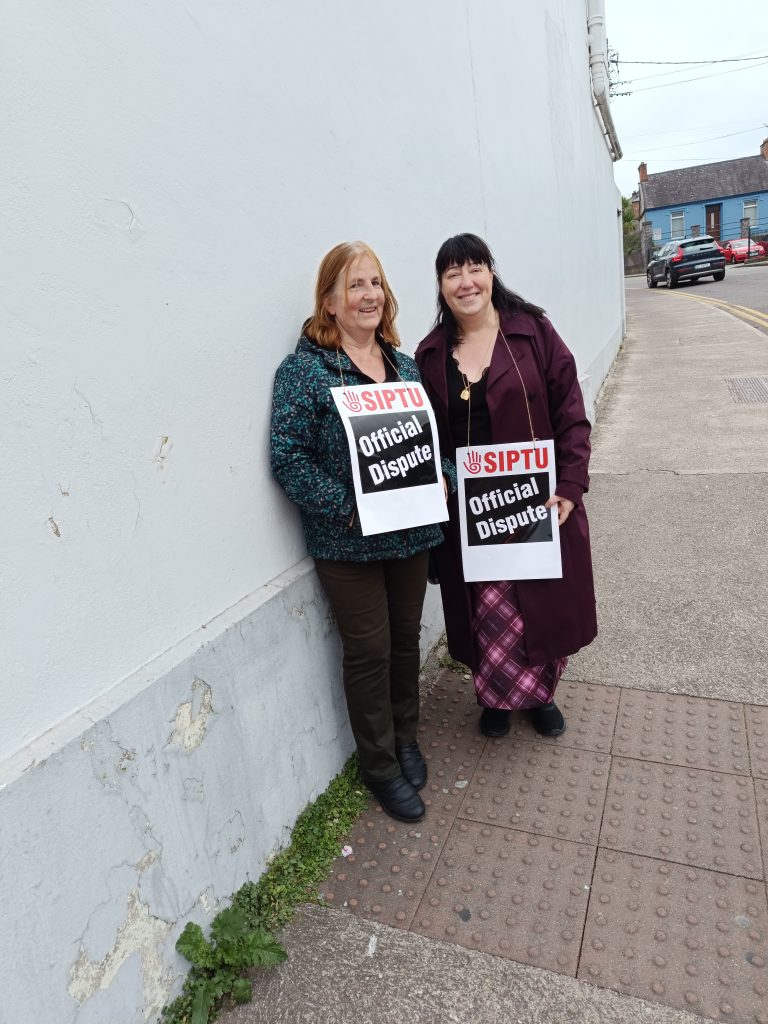
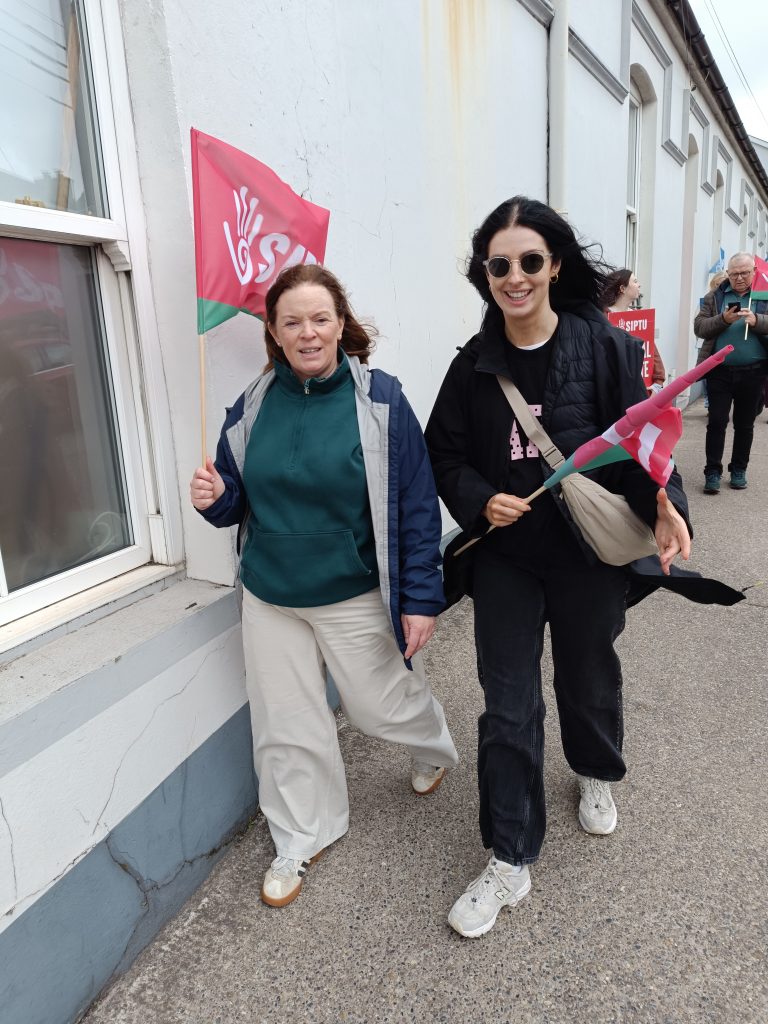
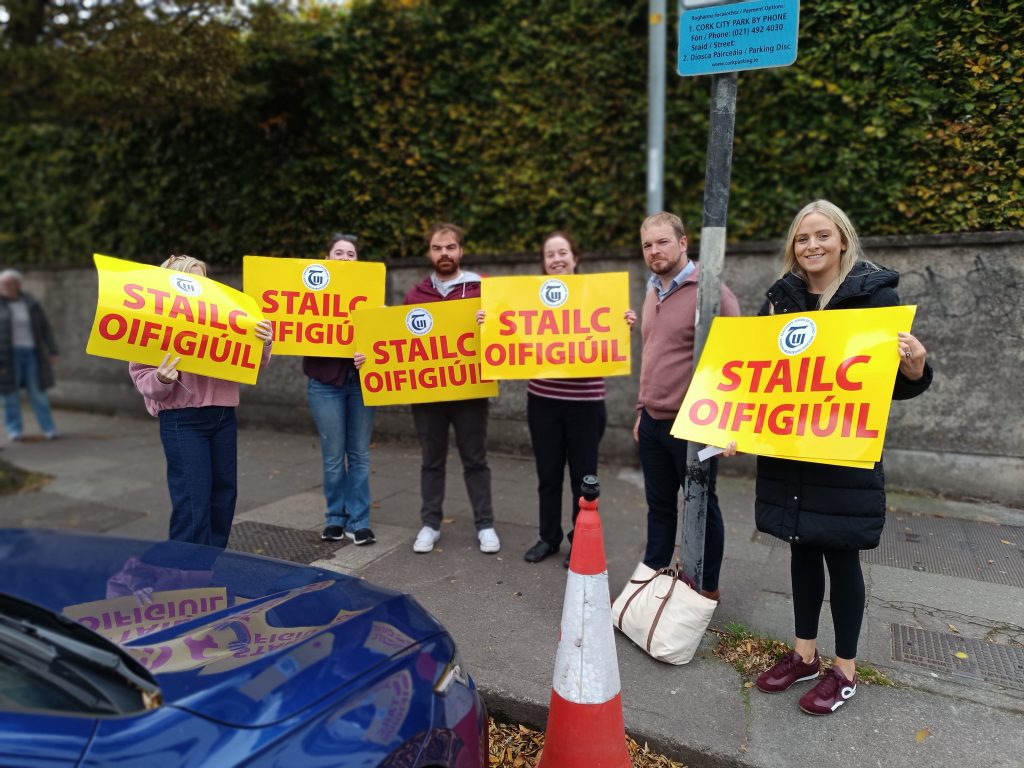
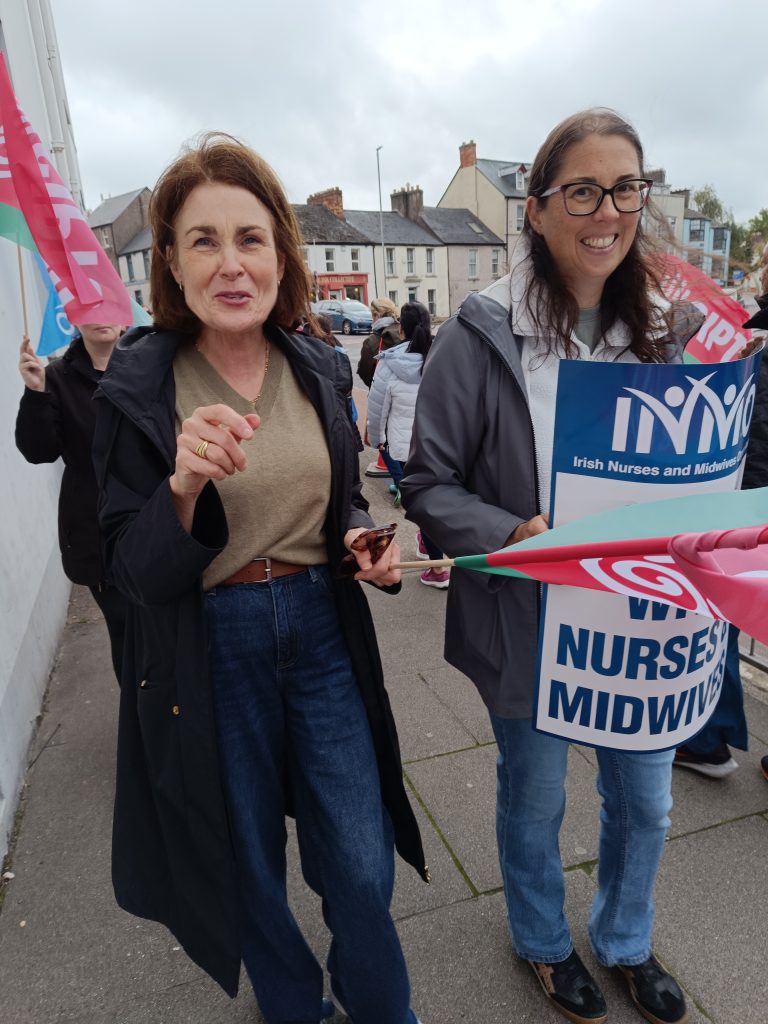
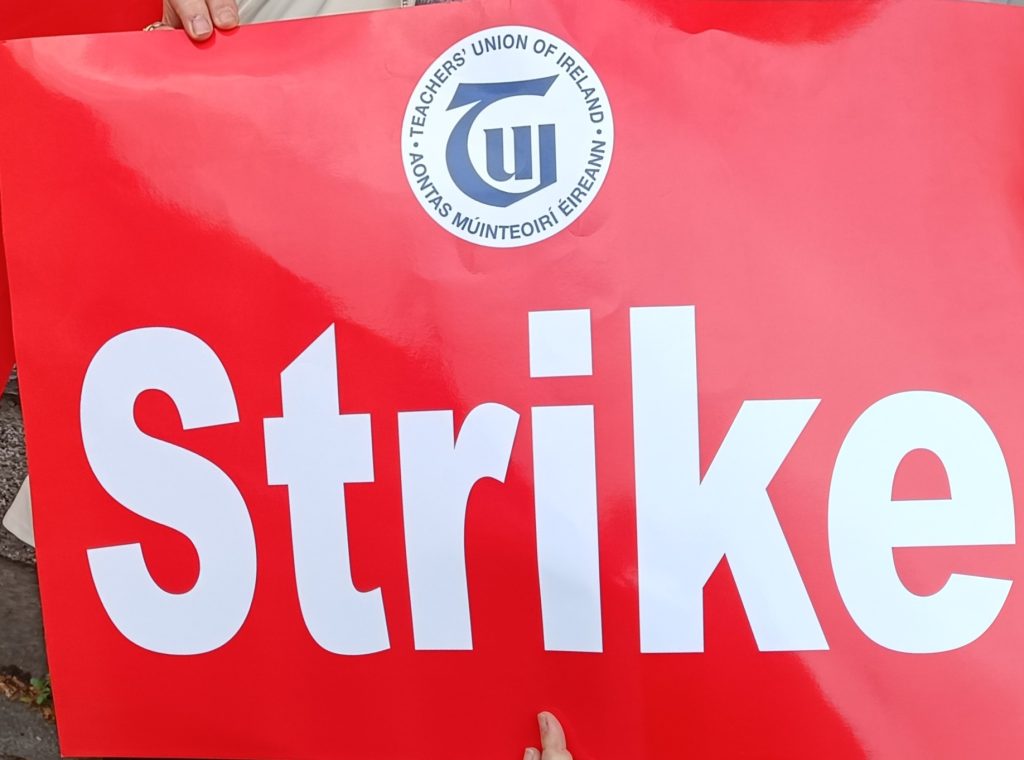
Outside City Hall – Cork 14th Oct 2026
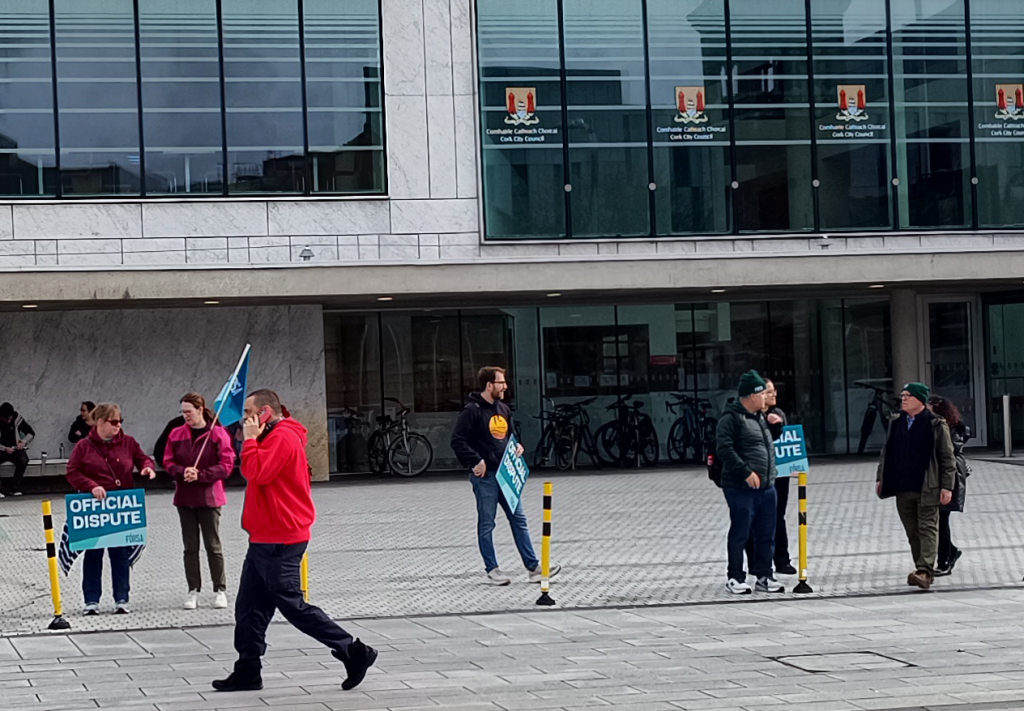
Similar picket lines were prominent all over the country.
SIPTU Deputy General Secretary, Adrian Kane, said:
“This mobilisation demonstrates the determination of our members to secure a better deal for workers struggling under a worsening cost of living crisis and a Government which is dismissive of their concerns.
In a statement issued on 14 October, SIPTU deputy general secretary Adrian Kane said the €1.2 billion allocated in the budget for public sector pay claims amounted to an increase of approximately 2.5 per cent in 2027, once pension costs and previous commitments
were included.
https://www.consilium.europa.eu/en/meetings/european-council/2026/10/14