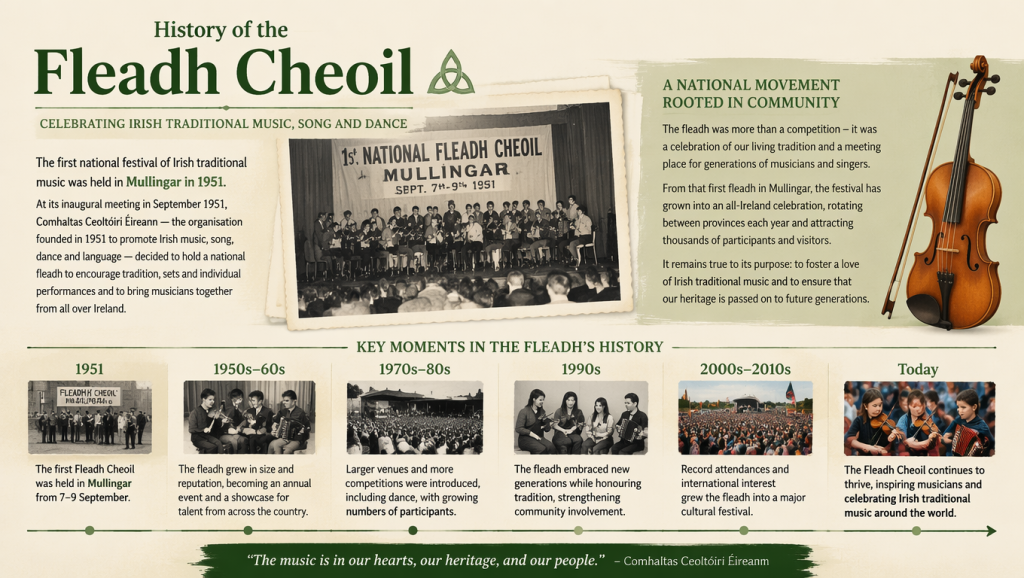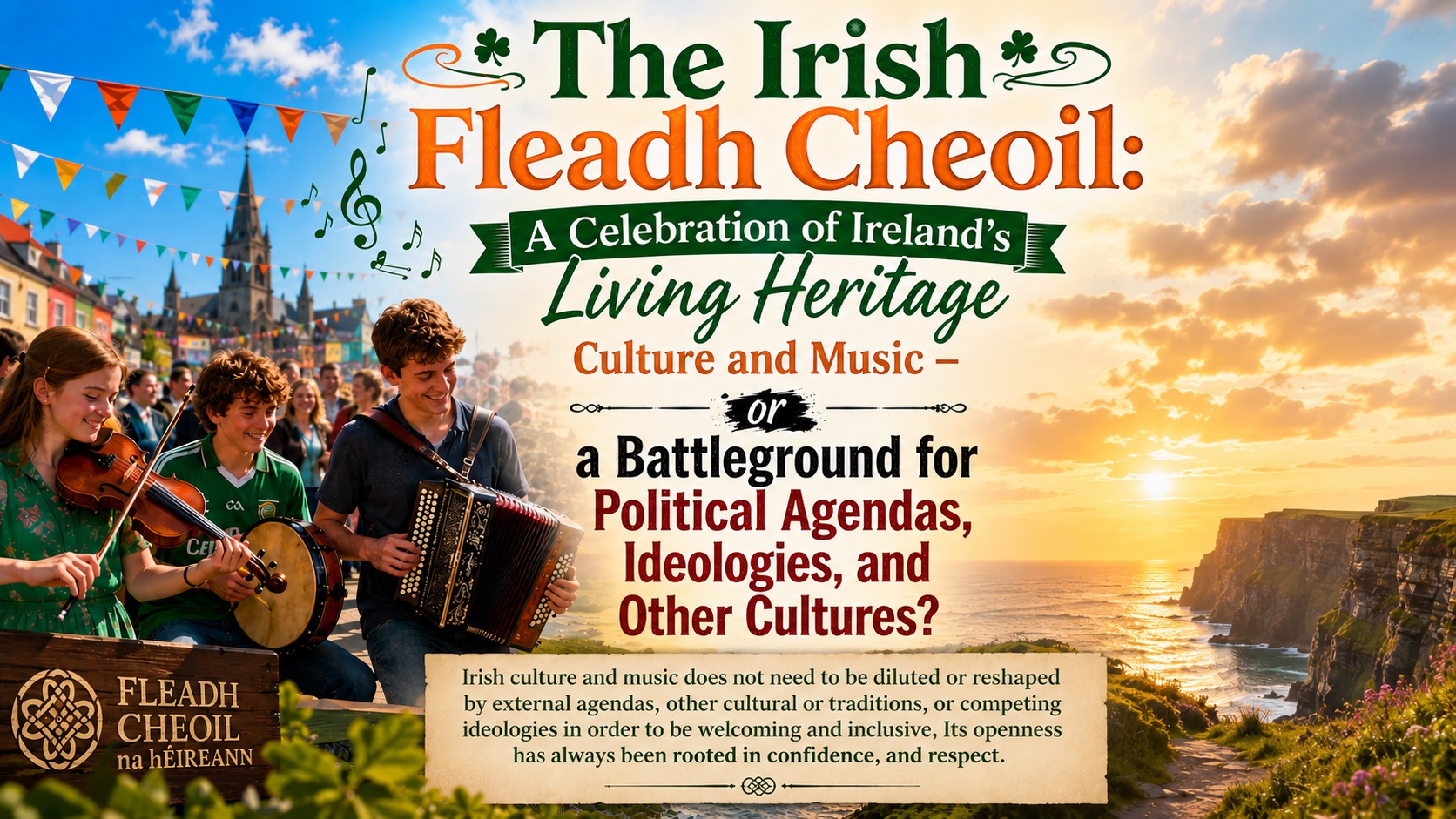
The Irish Fleadh Cheoil: a celebration built around one clear purpose: the preservation, promotion, and sharing of Irish traditional music, language, and heritage. It is an event that exists to showcase Irish musicians, singers, dancers, storytellers, and traditions that have been passed down through generations.
I have written to Visit Belfast
Re: Belfast Fleadh Fringe
They quoted”:
“The focus on cultural diversity is because Belfast is hosting one of the most inclusive Fleadhs in history. Promoters like Discover Northern Ireland highlight this openness to celebrate how music connects different backgrounds. For example, the festival features the Fleadh Fringe, which kicks off with inclusive community events like African Drumming workshops. The goal is to celebrate Irish traditional music while making everyone in the diverse city feel welcome.”
This statement raises an important question: are they implying that Irish music and culture, by itself, is somehow not welcoming? All other Fleadhs were not welcoming.
Misguided and deeply insulting
The Fleadh Cheoil should celebrate and protect the richness of Irish tradition, not diminish it in the name of misplaced notions of inclusion.
Irish culture does not need to be diluted or reshaped by external agendas, other cultural traditions, or competing ideologies in order to be welcoming and inclusive. Its openness has always been rooted in confidence, respect, and stood proud in its own unique identity.
To suggest otherwise is not only misguided but deeply insulting to the generations who have preserved and passed on Irish music, language, and heritage.
The focus should remain where it belongs: on the Irish music, musicians, the performers, the traditions, and the unique cultural identity that makes the what it is.
That is why many people are questioning the increasing emphasis on wider themes and events that appear to sit outside the core purpose of the Fleadh.
Why is it considered appropriate to use our rich Irish music and culture as a vehicle to promote ideologies, campaigns, or events that are not directly connected to the Fleadh Cheoil itself?
OPPORTUNISTIC
For many people, this does not feel like genuine cultural celebration; it feels opportunistic and unnecessary. Some Irish people have expressed concern that their culture is being used as a platform for messages and agendas that go beyond what the event was created to represent.
Irish traditional music has always had the power to bring people together. Its songs, stories, language, and shared experiences have connected people across generations and backgrounds for centuries.
I am an Irish musician playing globally, for years and I can assure you, the Fleadh Cheoil or our Irish music does not need to be redefined in order to be welcoming to anyone.
The Fleadh exists because Irish culture has value.
People attend because they want to experience Irish music, heritage, and tradition. They come to hear the instruments, the songs, the language, and the performances that make this celebration unique. That should be the central focus.
Of course, everyone who wishes to attend and engage with Irish culture are welcomed. Irish traditional music has never needed to exclude people in order to preserve its identity.
However, there is a difference between welcoming people into a cultural celebration and changing the purpose of that celebration to accommodate unrelated agendas.
Political or ideological messages
The question many people are asking is simple: why should a festival dedicated to Irish traditional music be expected to carry political or ideological messages that are separate from its original purpose?
Cultural festivals around the world are able to celebrate their own heritage confidently and proudly. A festival celebrating Irish music should be no different, a culture itself being allowed to stand proudly on its own.
Will the Fleadh Cheoil remain a proud celebration of Irish music, language, history, and heritage? Or will those who seek to weaken, dilute, and reshape its traditions ultimately prevail?
The challenge now is whether our Irish traditional custodians will stand firm and have the courage to defend and protect the integrity of our cultural legacy from those in very powerful positions of influence who may seek to diminish its true spirit and meaning.
Separate festivals celebrating other cultures
If there is a desire to organise separate festivals celebrating other cultures, that is, of course, entirely peoples prerogatives.
However, many believe, as do I, that Fleadh Cheoil should remain dedicated to its primary purpose: the celebration and promotion of Irish traditional music, culture, language, and heritage.