The Fleadh Cheoil na hÉireann (meaning “Festival of Music of Ireland”) is one of the most important celebrations of Irish traditional music, song, dance, and culture. It was established to protect, promote, and strengthen Ireland’s indigenous musical traditions at a time when many feared they were declining.
The Origins: 1951
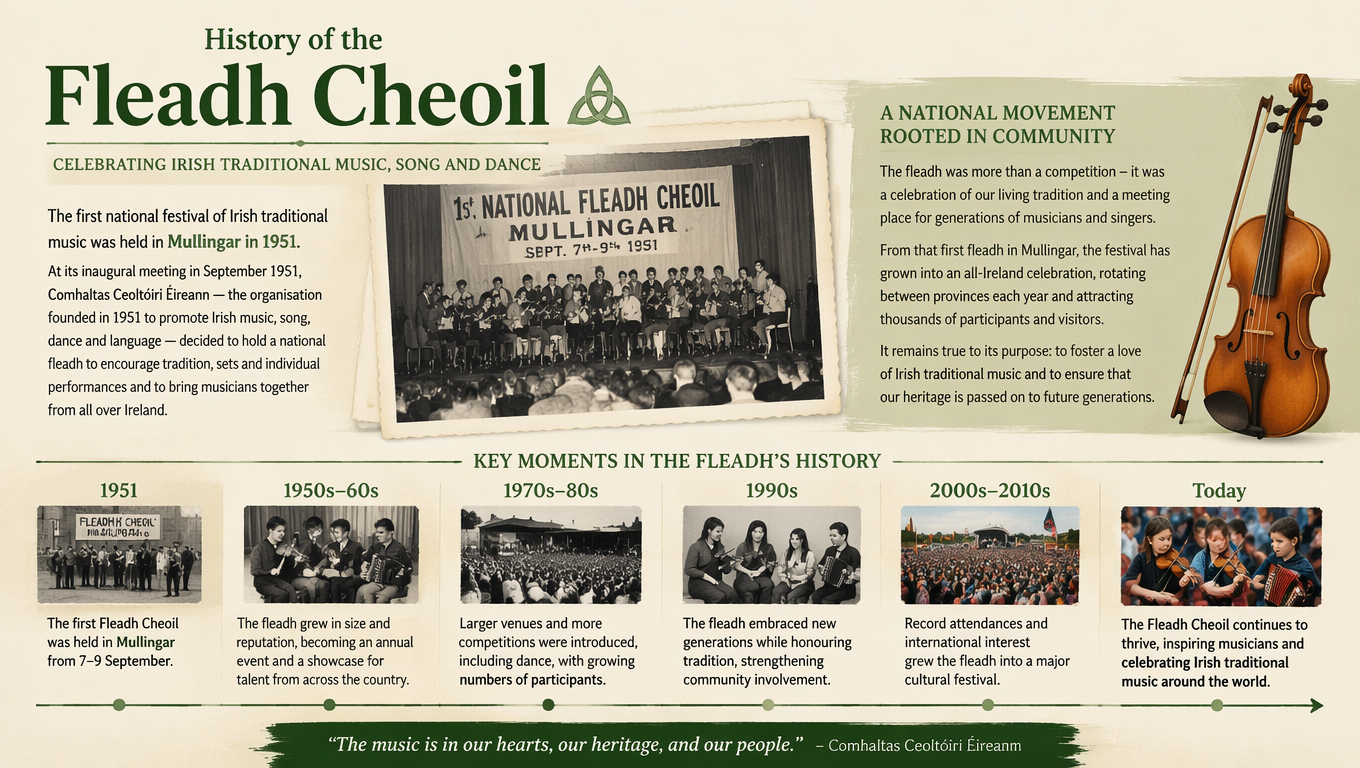
The first Fleadh Cheoil was held in Mullingar, County Westmeath, in 1951. It emerged from discussions among traditional musicians and cultural advocates who wanted to create an organisation dedicated to preserving Irish music and providing musicians with a national platform.
The organisation that grew from these efforts was Comhaltas Ceoltóirí Éireann, founded in 1951. Its purpose was to promote Irish traditional music, song, dance, and language and to ensure these traditions remained central to Irish cultural life.
The first Fleadh was created as a gathering where the finest traditional musicians from across Ireland could perform, compete, and share their skills. Competitions became an important part of the event, encouraging young musicians to learn and continue traditional styles of playing.
Why the Fleadh Was Created
The original motivation behind the Fleadh was cultural preservation. In the early 1950s, many traditional arts were considered vulnerable due to social change, the influence of popular entertainment, and declining opportunities for traditional musicians.
The Fleadh provided:
- A national stage for Irish musicians
- A place for young people to learn traditional music
- A celebration of Irish instruments such as the fiddle, uilleann pipes, flute, tin whistle, and bodhrán
- A way to preserve Irish songs, language, dance, and storytelling traditions
Growth of the Festival
From its beginnings in Mullingar, the Fleadh grew into a major national and international cultural event. Throughout the decades, it moved between towns and cities across Ireland, bringing musicians, dancers, families, and visitors together.
Today, Fleadh Cheoil na hÉireann is regarded as the world’s largest annual festival of Irish music, song, and dance. It includes hundreds of competitions, concerts, street sessions, workshops, and cultural events.
The Role of Comhaltas
Comhaltas Ceoltóirí Éireann remains central to the Fleadh tradition. The organisation developed a network of branches that teach and promote Irish traditional music throughout Ireland and internationally.
Its work has helped generations of musicians learn traditional styles and has played a major role in ensuring that Irish music continues to thrive.
More Than a Music Festival
Although the Fleadh is centred on music competitions and performances, it represents a much wider cultural tradition. It celebrates:
- Irish musical heritage
- The Irish language
- Storytelling and oral tradition
- Dance and community participation
- The passing of traditions from one generation to the next
The heart of the Fleadh has always been the music itself: musicians gathering together, sharing tunes, competing, learning, and celebrating a living tradition.
The Fleadh’s Cultural Identity
Because of its origins and history, many people view the Fleadh Cheoil as more than just a festival—it is a cultural institution created specifically to protect and showcase Irish traditional arts.
Its history is rooted in the belief that Irish music and culture have their own value and deserve a dedicated space where they can be celebrated, taught, and passed on.