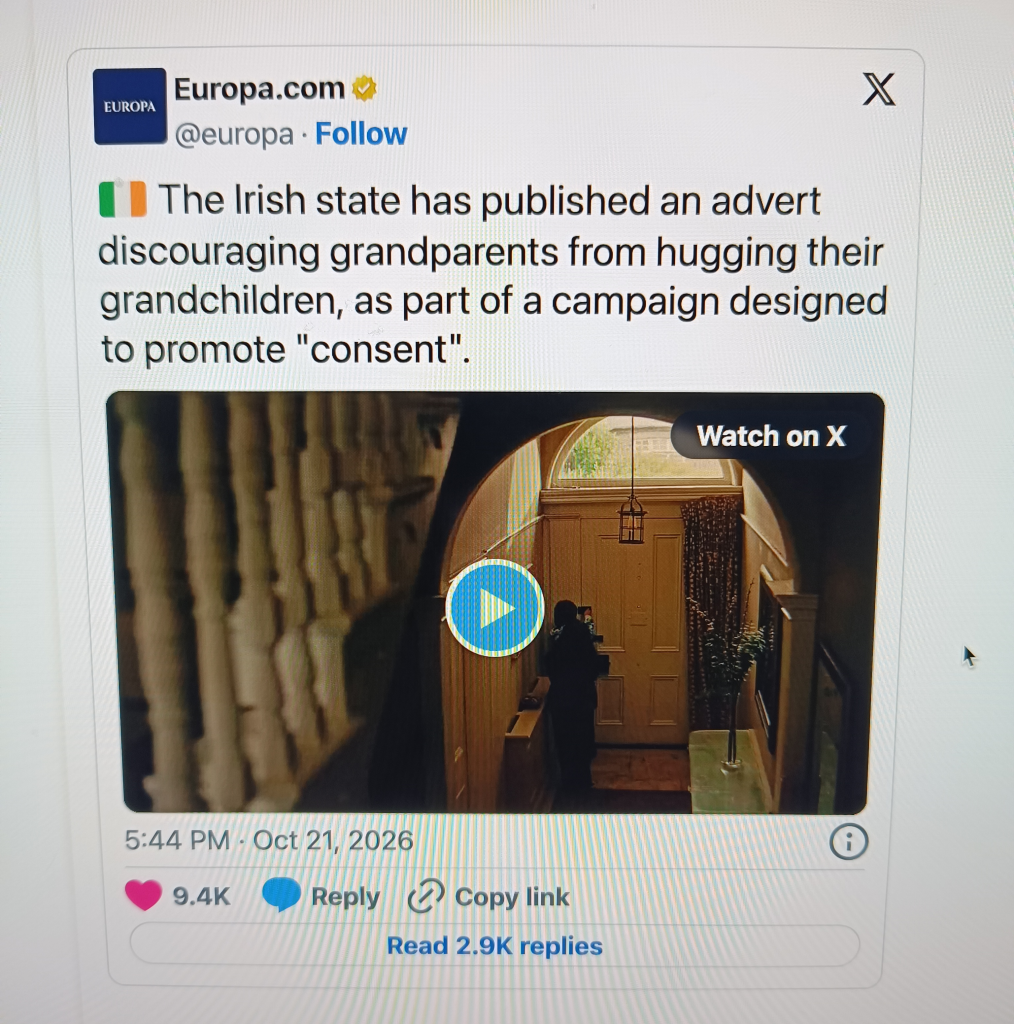
Update:
Photo of Ad on Europa.com
Accordingn to RTE The Dublin Rape Crisis Centre (DRCC) has removed it along with two others.
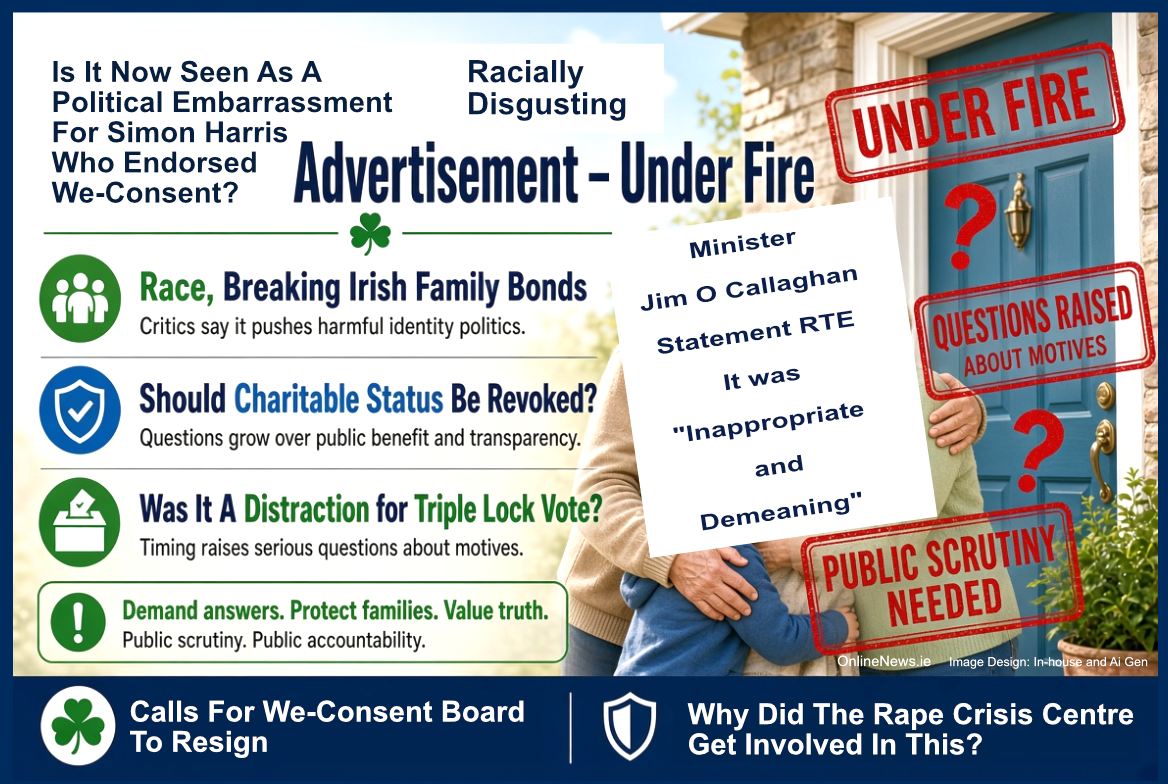
Minister for Justice Jim O'Callaghan said: "The video produced by the DRCC involving grandparents does not represent the views of the Government.
“It was both inappropriate and demeaning to grandparents and has been removed by DRCC following my officials engagement with them.
https://www.rte.ie/news/2026/1022/1596434-consent-video-drcc
But as of now as I write this 3.32 am 23/10/2026 – it is still live on x on Europa.com
We-Consent Advertisement Sparks Controversy in Ireland
Opinion: An Affront to Irish Grandparents and Irish Family.
Family Values and Public Accountability: Who Is Answerable to the Irish Public?
The controversy surrounding We-Consent raises a fundamental question that the Government and publicly funded organisations cannot simply brush aside: who holds these organisations accountable when their campaigns provoke widespread public anger, and what consequences follow when public confidence is damaged?
When a Campaign Threatens the Reputation of the Charity Behind It
There is a serious question about whether the We-Consent campaign’s approach is compatible with the Dublin Rape Crisis Centre’s core responsibility to survivors of sexual violence. The Centre has spent years building trust with people who may turn to it in their most vulnerable moments. That trust is an essential part of its work and must be protected.
If this We-Consent campaign has generated controversy that undermines public confidence in the organisation behind it, the consequences extend beyond the campaign itself. Survivors may feel disappointed or alienated, supporters may question the Centre’s judgement, and the charity’s vital work risks being overshadowed by disputes over its public messaging.
The fundamental concern is that a campaign intended to promote consent could end up damaging the reputation of the very organisation responsible for supporting survivors.
The Board must now consider whether the campaign’s direction and directors are compatible with the Centre’s mission, whether the current governance arrangements adequately protect the charity’s independence and reputation, and whether the two can continue under the same leadership without compromising the other and public trust.
We-Consent: A Campaign That Has Backfired
Whatever the original intentions behind We-Consent, publicly supported by the then Minister for Justice, Simon Harris, https://www.drcc.ie/news-resources/we-consent-a-new-three-year-campaign-ignites-a-national-conv/
Is it now a political embarrassment?
Has the grandparents advertisement become a serious public-relations failure for the Dublin Rape Crisis Centre. Instead of keeping the focus on consent education, it has provoked controversy over race, family relationships and the judgement behind the campaign’s creative decisions.
For an organisation whose work depends on the trust of survivors and the wider public, is this a damaging outcome? The Board must explain how the advertisement was approved, whether its potential consequences were properly considered, and what accountability will follow.
A campaign intended to promote understanding should not leave its own organisation struggling to defend its decisions. If We-Consent has undermined confidence in the Centre, the Board must confront that failure openly and consider stepping down.
Legal Questions: Is There a Basis for Formal Legal Action?
The strength of public opposition does not, in itself, establish that the law has been broken but the statement by: Minister -Jim OCallaghan “inappropriate and demeaning“, now ads weight to the suggestion, what does that mean in legal terms for the board of we-consent?
However, the racial implications that some viewers perceive in this advertisement raise serious questions as well. Is there a legal basis for a formal complaint or further investigation into whether the advertisement crosses any legal boundaries?
Should the charity’s tax-exempt charitable status be reviewed in light of the controversy and the public concerns raised? And, if the advertisement is found to promote or tolerate racial hostility, should the Minister responsible be held politically accountable, including consideration of whether their resignation is warranted? These are questions that demand clear answers, transparency and accountability from those responsible.
Any proposal for legal action must be assessed separately, on the basis of evidence and applicable law.
The key questions are:
- Discrimination: Is there evidence of unlawful discrimination, rather than simply a disputed or unpopular creative decision?
2. Regulatory complaints: Is there a legitimate basis for a complaint to an advertising standards body or another relevant authority? Could the advertisement have Cross a Line on Race?
Does the We-Consent advertisement raise legitimate concerns about racial representation and the potential to inflame social tensions?
3. Legal proceedings: Has any identifiable legal claim been filed yet, and, if so, what specific law or legal duty is alleged to have been breached?
4. Charitable status: Are there substantiated grounds to ask the relevant regulator to examine whether the charity continues to meet its legal obligations?
5. Public funding: Was public money used in accordance with the applicable funding conditions and accountability requirements?
What are the implications for the Actors who are in the ad?
Does not represent views of Government’
The We-Consent project is supported by the Department of Justice and the Department of Children, Disability and Equality.
Minister for Justice Jim O’Callaghan said: “The video produced by the DRCC involving grandparents does not represent the views of the Government.
“It was both inappropriate and demeaning to grandparents and has been removed by DRCC following my officials engagement with them.
https://www.rte.ie/news/2026/1022/1596434-consent-video-drcc
Grandparents who lovingly care for their grandchildren
What damage has already been done by this advertisement?
What about the grandparents who lovingly care for their grandchildren while their own children go out to work to support their families and contribute to this Government’s ever-growing tax revenues?
Did the people who created this advertisement give any thought to the countless grandparents who play an essential role in supporting working families? Or are their contributions simply being ignored?
The message portrayed in this advertisement is truly shocking. It risks undermining the important role grandparents play in family life and society.
Grandparents deserve respect, not demonisation. Families deserve support, not division.
What kind of country are we now living in?
Day after day, Irish people are subjected to what feels like a relentless psychological assault, in one form or another. Whether in our schools, universities, workplaces, sporting institutions or through media outlets, the pressure is constant. It is relentless, with no respite.
It is truly disgraceful. This Government must either get its act together and start standing up for the Irish people, or step aside.
It is becoming clear that we need to establish some form of independent legal framework to defend against this.
A Separate Political Question: The Triple Lock Vote
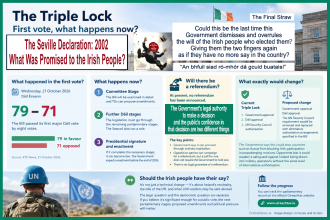
The timing of the advertisement also raises questions about whether it diverted public attention from the crucial Triple Lock Vote.
It is entirely possible that the controversy has provided a convenient distraction from what many regard as a deeply controversial political decision.
As public debate became consumed by outrage over the We-Consent advertisement, attention may have shifted away from the vote to remove the Triple Lock.
Disclaimer:
This article represents the author’s opinions and commentary on matters of public interest, including the We-Consent advertisement, charitable status, public funding and the Triple Lock vote. Questions concerning political motives or possible distractions are raised for public discussion and are not presented as established facts. The article does not seek to undermine consent or the support provided to victims of sexual violence, but to encourage transparency, accountability and open debate. Any factual errors brought to the author’s attention will be considered for correction.