Current Ireland National Debt Figures
Eurostat/CSO
Gross Government Debt: Approximately €209 billion to €232 billion (latest available data from Q3/Q4 2025 and end-2025).
- Central Bank figures (end-2025): €232.1 billion.
- Eurostat/CSO general government gross debt (Q3 2025): €208.96 billion.
- Debt per person: Roughly €41,000 – €51,000 depending on the exact measure and population (Ireland has about 5.3–5.4 million people).
- Debt per worker: Nearly €90,000 (as highlighted in recent reports).
- The Irish Fiscal Advisory Council (IFAC) warned in November 2025 that the Irish Government is “Budgeting like there’s no tomorrow,” risking a €14 billion underlying deficit next year. They warn this leaves Ireland vulnerable if multinational profits drop suddenly.
- https://www.fiscalcouncil.ie/wp-content/uploads/2025/11/Fiscal-Assessment-Report-November-2025.pdf
________________________________________
Full transparency in needed on every euro of public spending, both domestic and international, is the absolute minimum standard in a democracy.
Not 34,000 NGOs receiving uncontrolled and hidden billions in taxpayers’ money, while the government continues to maximise taxes on working people to fund this reckless behaviour.
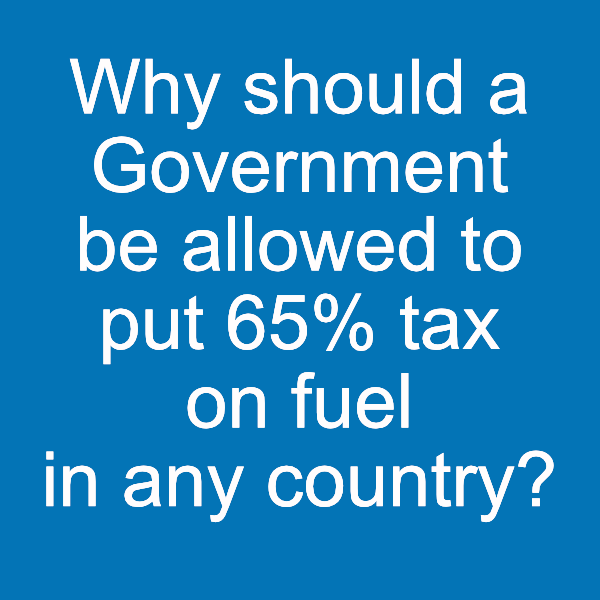
Why should a government be allowed to put 65% tax on fuel in any country?
Ireland has some of the highest fuel taxes in the EU.
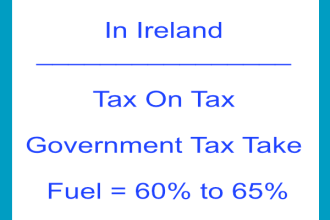
In Ireland, taxes (excise duty + carbon tax + VAT + minor levies like NORA) often make up 60–65% of the pump price for petrol and around 60% for diesel
In short: No government has a moral or automatic right to take 65% of the price of an essential good. Taxation should be proportionate, transparent, and justified by clear public benefit — not treated as an unlimited funding source.
High fuel taxes can distort the economy, punish working people, and reduce living standards without delivering proportional improvements in services or the environment.
If the Irish Government continues to make top-down decisions on public spending — both at home and abroad — with little or no real consultation with the Irish people, then every single euro of taxpayers’ money must face strict, unquestioned legal accountability.”
Taxpayers expect and are entitled to legal accountability — routine audits, competitive processes where possible, public breakdowns, recovery of overpayments, and consequences for poor management.
It is truly shocking to see senior officials and CEOs of Irish state-funded bodies appear before Dáil committees, only to admit they have no idea where tens or hundreds of millions of taxpayers’ money went — or in some cases, whether any formal contract was even issued. Limited competitive tendering. They then walk out of the committee rooms with zero consequences, as if nothing happened.
This behavior cannot be tolerated any longer.
No more undocumented or poorly overseen spending. Full financial transparency must be written into all appointment contracts— with mandatory audits, strict value-for-money tests, and real legal consequences for those who waste or mismanage taxpayers’ money.
- Taxes are hard-earned public money.
- Government has a duty to account for every euro collected and spent.
- Future policy rollout must be matched by legal zero tolerance for squandering, overpayments, weak contracts, or lack of due diligence.
- Legal and financial accountability must be automatic — not optional or reactive.
Is – “Irish Aid” or “foreign aid – being spent in Ireland to support Asylum Seekers.
Ireland reports a large total Official Development Assistance (ODA) figure every year — this is what the public often calls “Irish Aid” or “foreign aid”. - In 2024, Ireland’s total reported ODA was €2.35 billion.
- A very large part of this (sometimes 50–68% in recent peak years) is not actually sent overseas. Instead, it is money spent inside Ireland on accommodation, food, transport, security, and other supports for refugees and asylum seekers (including both international protection applicants and Ukrainians in their first year here).
- This is allowed under international OECD rules — countries can count the cost of hosting refugees as part of their “foreign aid” total. Critics argue this makes the headline “foreign aid” number look much bigger than the genuine overseas spending (which was around €775–840 million in recent years).
The contrast with homelessness – Right now (early 2026), Ireland has a record homelessness crisis: - Over 17,300 people were in emergency accommodation in February 2026 (latest figures).
- This includes roughly 11,850 adults and 5,450 children.
- Numbers have been rising month after month and are at an all-time high.
Spending is just gone off the scale
Ministers such as Helen McEntee (Foreign Affairs) and Neale Richmond (International Development) regularly travel to places like Ukraine, Gaza/Rafah, Lebanon, Africa, and elsewhere to personally announce and increase Irish Aid packages — for example:
Record €840 million+ core Irish Aid budget in 2026.
- Extra €40+ million announced in Ukraine this year (bringing 2026 total to €65 million).
- €42 million pledged for Palestine.
- Hundreds of millions in humanitarian aid to Sudan, Gaza, Syria, and other crises.
€141.4 million pledged by Ireland to the World Bank’s International Development Association (IDA) 10 million euro more than requested.
IPAS Asylum/International Protection Accommodation
- €71 per night per person (hotels/operators)
- Weekly Per Person €497.00
- €3.29 million per day
- €1.2 billion in 2025 — almost double 2023(€652m)
312+ centers - Money to countries all over the world including Sub-Saharan Africa, humanitarian crises (Sudan, Gaza, Ukraine, Syria, Yemen, etc.), Irish NGOs, and UN agencies.
- Critics argue the large domestic refugee component inflates the “foreign aid” headline while domestic services face pressure.
Audit & Oversight Issues Highlighted by Comptroller & Auditor General (C&AG):
But what has been done by this office?
- Millions in overpayments (e.g., €7.4 million incorrect VAT on one provider — only partial refund so far; additional €5.1 million+ from contract non-compliance).€7.4 million VAT Overcharge
This was charged by one single private provider that operates multiple IPAS properties (using three different VAT registration numbers).
Asylum accommodation is VAT-exempt under Irish tax rules.
The provider incorrectly added VAT to invoices, even though the supply of emergency asylum accommodation is VAT-exempt under Irish tax rules.
Official Revenue Rules (Ireland)According to the Revenue Commissioners’ Tax and Duty Manual on Emergency Accommodation and Ancillary Services: - The core supply of emergency accommodation itself is VAT-exempt.
This covers: - Accommodation in houses, apartments, or similar establishments.
- Hotel/guesthouse rooms contracted exclusively for emergency asylum/IPAS use (and not available to the general public).
- Direct Provision / IPAS centres.
- Ancillary services that are included in the cost of the emergency accommodation and directly related to it are also treated as exempt.
Examples explicitly listed by Revenue. - Weak due diligence: incomplete documentation on properties (fire safety, insurance, planning permission, ownership).
Contracts – Profiteering - Some contracts awarded without full signed agreements or proper compliance checks. If these providers are still trading, is money still being paid to them?
- Profiteering concerns and rapid cost escalation flagged in PAC hearings.
_____________________________________
National Children’s Hospital: €2.24 billion + on one building that is years late.
Arts Council IT Project Failure (Major Overspend) - The Arts Council spent €6.7 million (some reports say a net loss/write-down of €5.3 million) on a failed IT system upgrade project.
The project ran from 2019 to 2024 and was ultimately abandoned because it was not fit for purpose. Imagine that, just abandoned the project and no one answers for the loss.
This list could go on and on. - Millionaire Landlord active politicians (TDs) and party members profiteering: public money.
Is a TD’s Job, a real job, or it is just a means to an end for people to get elected for private profit?
What about this for instance:
Social media reports suggest that companies associated with Donie Cassidy have received significant payments for renting properties as IPAS accommodation.
Donie Cassidy, a long-time Fianna Fáil figure and current Vice President of Fianna Fáil, has received significant state payments through his company for providing emergency accommodation under the IPAS (International Protection Accommodation Service) system.
Key Facts:
His company, Great Denmark Hospitality Limited (linked to Barry’s Hotel and other properties), has been paid approximately €5 million to €7 million in state contracts for emergency accommodation (mainly for Ukrainian refugees and/or international protection applicants).
More very interesting information here from
Mick Delehanty
This has to stop, there has to be real change here: legal consequences, responsibility for waste, over payments, political profiteering, and poor management.