Irish War of Independence
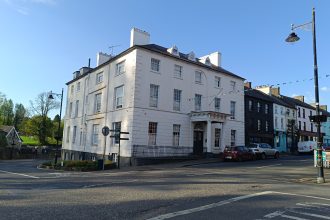
I visited Soloheadbeg recently tracing my family’s history.
My father was just fourteen when the war started.
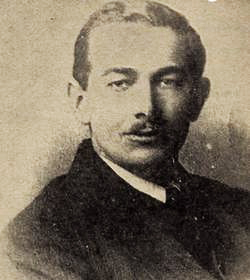
(“Jack (or John) Treacy from the Knocklong area who was involved with the IRA during the Irish War of Independence at around age 14, separate from the well-known Seán Treacy (born 1895, leader in Soloheadbeg and Knocklong rescue).
John /Jack Treacy, Company, 4 Battalion, East Limerick Brigade”).
Soloheadbeg is a small townland and rural area in County Tipperary, Ireland, near Tipperary town (about 3–10 km away, close to the Limerick border). It’s historically significant primarily for the Soloheadbeg Ambush on 21 January 1919, widely regarded as the opening shots of the Irish War of Independence (1919–1921).
Background and Context
- In late 1918, members of the 3rd Tipperary Brigade of the Irish Volunteers (soon to be known as the Irish Republican Army or IRA) learned that a consignment of gelignite was being transported from Tipperary Military Barracks to Soloheadbeg Quarry.
- Key figures included Dan Breen, Sean Treacy, Séamus Robinson, Seán Hogan (the “Big Four” of the brigade), along with others like Tadhg Crowe, Patrick McCormack, Patrick O’Dwyer, and Michael Ryan — a group of 8–9 men.
- The action was unauthorized by higher Volunteer leadership; it was a local initiative to seize arms/explosives and revive militant republicanism after the Easter Rising of 1916 had fizzled politically.
What Happened on 21 January 1919
- Two constables from the Royal – Irish Constabulary (RIC) were walking alongside a horse-drawn cart carrying about 160 lbs of gelignite (explosives for quarrying) from Tipperary Military Barracks to Soloheadbeg Quarry, near Tipperary town. They carried loaded rifles and were accompanied by two civilian council workers (Patrick Flynn and Ned Godfrey).
____________________________________________
(The Royal Irish Constabulary (RIC) was the main police force in Ireland from the early 19th century until 1922, when the entire island was part of the United Kingdom of Great Britain and Ireland) The RIC was distinctive compared to the police forces in Britain. It had a paramilitary structure, with constables routinely armed (often with rifles or carbines), living in fortified barracks (especially in rural areas), and organized in a hierarchical, army-like system.
________________________________________________ - Around midday (between 12:30–1:00 pm), the masked Volunteers ambushed the group on a quiet rural road near the quarry.
- Accounts vary slightly on the exact sequence:
- Dan Breen (in his memoir My Fight for Irish Freedom) claimed the constables raised their rifles in response to the “Hands up!” command, forcing the Volunteers to open fire.
- There are many versions of the events, RIC propaganda was rife following the event.
- Dan Breen (in his memoir My Fight for Irish Freedom) claimed the constables raised their rifles in response to the “Hands up!” command, forcing the Volunteers to open fire.
- Both constables were shot dead (the first RIC fatalities in the emerging war).
- The attackers seized the gelignite, the constables’ rifles, ammunition, and other items.
- They escaped with the explosives; the horse and empty cart were later found abandoned near Dundrum.
Significance and Aftermath
- The ambush coincided exactly with the first meeting of Dáil Éireann (the revolutionary Irish parliament) in Dublin, where Sinn Féin TDs declared Ireland’s independence from Britain.
- This symbolic timing helped cement it as the symbolic start of the War of Independence otherwise know as the Anglo-Irish War.
- The Volunteers went “on the run” as wanted men, with large bounties placed on them (e.g., wanted posters for Breen and Treacy).
- Memorials exist today, including at graves of Breen and Treacy, and a Third Tipperary Brigade memorial.
Soloheadbeg itself is otherwise a quiet agricultural area with a quarry — the ambush transformed its name into a key marker in Irish revolutionary history.
Have we gone full circle now as our country faces another devastating part of our Irish history?
For more information
Editor
Seán Treacy