“Ireland being dragged into an indefinite escalation of hostilities”
Maria Zakharova, spokesperson for Russia’s Ministry of Foreign Affairs. She comments critically on Ireland’s reported involvement in an EU-level decision to approve a €90 billion loan package for Ukraine covering 2026–2027, with a significant portion directed toward military support.
Key points from Zakharova’s statement (based on the video description and content):
- She highlights opposition from Irish political parties and public figures criticizing the Irish government (under Micheál Martin) for supporting the allocation, which she frames as burdening Irish taxpayers.
- She argues the funds primarily benefit military manufacturers in the EU and contribute to prolonging the conflict rather than peace.
- Claims are made about prior Irish aid (~€464 million already sent) going toward “extremist and terrorist” activities and corruption in Kyiv (standard Russian narrative phrasing).
- She dismisses any realistic chance of recovering costs via Russian reparations or frozen asset seizures.
- Strong emphasis on Ireland’s traditional military neutrality being eroded, pulling the country deeper into EU/NATO militarization, higher defense spending, and geopolitical agendas driven by Brussels and London — all while domestic issues like social services remain underfunded.
Irish tax payers who are funding this have no say as Martin and this Government go headlong without any meaningful consultation with the Irish people, dragging our small country deeper and deeper into this conflict.
________________________________________________
Ireland’s spending related to Ukrainians since February 2022 falls into two main categories:
- Direct bilateral aid and support to Ukraine (humanitarian, economic, stabilisation, non-lethal military assistance, etc., sent to Ukraine or for its benefit).
- Costs of hosting and supporting Ukrainian refugees in Ireland (accommodation, social welfare, integration services, etc.).
These are often reported separately, as direct aid goes to Ukraine itself, while refugee hosting is domestic expenditure benefiting people from Ukraine.Direct Aid to Ukraine
Official Irish government figures (from the Department of Foreign Affairs and related announcements) indicate Ireland has provided around €467 million in financial aid and support to Ukraine as of early February 2026. This includes:
- Humanitarian and stabilisation supports.
- Non-lethal military aid (e.g., equipment like radars, vehicles, body armour).
- Economic and energy-related assistance.
Breakdown from recent reports:
- As of late 2025 / early 2026: ~€467 million total (including a €125 million package announced during Zelenskyy’s visit in late 2025, plus prior commitments like €100 million+ in non-lethal aid and humanitarian packages).
- Earlier figures: Over €380 million as of September 2024 / late 2025, rising with additions like €36 million packages and further non-lethal support.
This aligns with statements from the Department of Foreign Affairs and media coverage (reporting over €464 to €467 million to date in February 2026).
Note: Ireland also contributes via EU mechanisms (e.g., European Peace Facility for non-lethal aid), but the bilateral figure focuses on direct Irish commitments.
Costs of Hosting Ukrainian Refugees in Ireland, Ireland has hosted over 120,000 Ukrainians under temporary protection since 2022, with around 80,000–100,000+ still present in recent periods.
The total cost of supporting these refugees (housing, welfare payments, healthcare, education, etc.) is significantly higher and often described in the “billions” range when combined:
- Estimates from various sources (including media analyses and commentary) suggest cumulative spending on refugee support reached approximately €1.6 billion up to late 2024, with additional costs in 2025 pushing the combined total (aid + hosting) over €2.1 billion by end-2025 / early 2026.
- Specific elements include:
- Social welfare payments (e.g., €141 million in 2022 alone for some supports).
- Accommodation schemes (e.g., Accommodation Recognition Payment to hosts: ~€272 million paid by March 2025 for hosting tens of thousands).
- State-provided housing, integration, and services.
- Experts and reports note that hosting costs are “billions” and not always reflected in military aid rankings, emphasizing Ireland’s overall financial contribution.
Precise up-to-the-minute totals for 2026 are not always consolidated in one official source due to the complexity (spanning multiple departments like Foreign Affairs, Social Protection, Integration, etc.), but the combined figure for direct aid to Ukraine + domestic refugee support is commonly cited in the €2+ billion range as of late 2025/early 2026.
_____________________________________________
All of this while people all over Ireland and families struggle to get accommodation often finding themselves homeless
While all of this money is being spent on Ukrainian and Ukrainians, people all over Ireland and families struggle to get accommodation often finding themselves homeless. Official Figures (Emergency Accommodation Only)
These are the verifiable counts from the government’s monthly Homeless Report for December 2025:
- Total people in emergency accommodation: 16,734 (a decrease of 262 or ~1.5% from November 2025’s 16,996, but still near record levels and up 12.6% or 1,870 people compared to December 2024).
- Adults: 11,546
- Children: 5,188 (down from higher November figures, but child homelessness rose ~15% year-on-year).
- Families: 2,478 (family homelessness up ~18% year-on-year).
- Single adults: Majority of adults (exact single breakdown often around 7,000+ in recent months, with Dublin dominating).
This represents the worst year on record for rising homelessness per charities like Focus Ireland, despite the small December dip (often seasonal, e.g., temporary family stays over holidays).
Numbers are expected to rise again in early 2026 reports. These exclude rough sleepers, domestic violence refuges, asylum seekers in certain setups, and hidden forms.
The official report is available directly from gov.ie (Homeless Report December 2025 PDF). True/Hidden Scale Estimates
Charities emphasize that official figures understate the crisis significantly, as they only track those in managed emergency accommodation. The “true” number—including hidden/invisible homelessness—is much larger.Key estimates from reputable sources:
- Simon Communities of Ireland (a leading homelessness charity): As many as 290,000 people across Ireland (Republic-focused in many contexts) are likely experiencing hidden homelessness.
This includes sofa-surfing (staying temporarily with friends/family), overcrowded/insecure situations, or precarious arrangements without presenting to services.
Their research (poll-based) shows 1 in 4 people personally affected or knowing someone in hidden homelessness, with friends/family increasingly relied upon due to housing shortages.
Tens of thousands of additional individuals beyond official counts. - An all-island poll (Simon Communities of Ireland and Simon Community NI, from recent years but still cited): Approximately 32,000 households island-wide experiencing hidden homelessness (~24,000 in the Republic of Ireland). This translates to tens of thousands of additional individuals beyond official counts.
- Other charities (Focus Ireland, NOVAS, Dublin Simon Community): Consistently describe the real scale as “considerably higher” or “much larger,” noting that hidden forms (especially affecting women, families fleeing domestic violence, young people, and marginalized groups) are not captured.
They advocate for broader definitions (e.g., ETHOS European typology) that would include insecure/inadequate housing, leading to estimates in the tens of thousands extra. - No single 2026 nationwide “total including hidden” figure exists (hidden homelessness is hard to count precisely, relying on polls, outreach, and qualitative data), but the consensus is that the crisis affects far more than the ~16,700 official tally—potentially adding tens to hundreds of thousands in broader exclusion terms, though the 290,000 is the most commonly referenced high-end estimate for hidden impact.
___________________________________________
What happened to all the money given to Ukraine from Ireland?
Standard Russian narrative phrasing or not.
“Claims are made about prior Irish aid (~€464 million already sent) going toward “extremist and terrorist” activities and corruption in Kyiv”.
Some would argue that this statement is standard Russian narrative phrasing but neither we nor the Russian people have proof that this is not the case. So where are the actual breakdown figures of where the money ended up?
At the very least we should know who received the money handed over to Ukraine while our country is facing so much homelessness.
Is this money being used for humanitarian reasons or to drag “Ireland into an indefinite escalation of hostilities”. In the process eroding Ireland’s traditional MILITARY NEUTRALITY.
We need political accountability, it is essential now.
____________________________________________
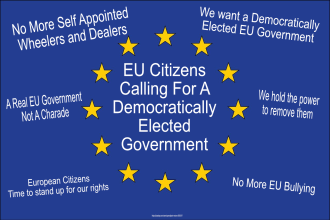
It is becoming more obvious day by day that the countries in the EU are only pawns on the Germany chess board. Having lost two world wars responsible for killing millions globally, Germany is working for years on this new strategy now unfolding in clear view as Ursula von der Leyen is openly pushing to scrap the EU’s unanimity rule, the very safeguard that protects national sovereignty.
We and the other nations are now to be used for another go at world dominance. Anyone with a brain in their heads should have seen this coming for years, but now it seems it is getting nearer and nearer for the World War 111 as von der Leyen, resembling Hitlers rise is getting ready to strike.
Media grabbing around the world, including Ireland
Remove all member states national sovereignty to be replaced by von der Leyen at the head of a German military run Europe. This seems to be the plan unfolding.
_________________________________________________
The EU Unanimity Rule
The EU unanimity rule refers to the requirement in the European Union’s decision-making process that all member states must agree (i.e., vote in favor or abstain without blocking) for certain decisions in the Council of the EU to pass.
This contrasts with the more common qualified majority voting (QMV), where a decision passes if supported by at least 55% of member states (currently 15 out of 27) representing at least 65% of the EU population.Unanimity applies to sensitive policy areas that member states view as touching on core national sovereignty or interests. Key examples include:
- Common Foreign and Security Policy (CFSP) — the main rule here, with limited exceptions (e.g., appointing special representatives can use QMV in specific cases).
- Taxation — especially harmonization of indirect taxes (like VAT) or direct taxes affecting national legislation.
- EU enlargement/membership — decisions on accepting new members, opening/closing negotiation chapters (though some steps are more practice-based than strictly treaty-required).
- Citizenship — granting new rights to EU citizens.
- Social security and social protection harmonization.
- Certain aspects of budget or multiannual financial framework elements, though much of the budget uses other rules.
- Rule-of-law procedures under Article 7 TEU (e.g., sanctions for breaches).
Unanimity is explicitly listed in the EU Treaties (primarily the Treaty on European Union and Treaty on the Functioning of the European Union), and the areas requiring it are exhaustive — meaning they can’t be expanded without treaty change, but they’ve been reduced over time (e.g., via the Single European Act in 1986 and later treaties like Lisbon).
Any changes here should require referendums in each country.
Leaving is probably a much better option now as the EU seems to be falling deeper and deeper into the abyss, going completely out of control.
It is like watching the rise of Hitler all over again, we are at a very dangerous time now in world history.